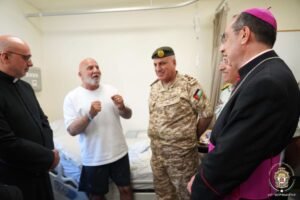
The attack on Saint George Orthodox Church in Hmoud on 23 October 2026 filled our hearts with sorrow. Nine lives were lost, many others were injured, and families across Jordan shared in the grief of those who mourn. My prayers remain with the victims, their loved ones, and all who continue to suffer from the consequences of this senseless act of violence.
Yet amid the sadness, another reality became visible. Jordanians from every background reached out with compassion and solidarity. Religious leaders, public officials, neighbors, and ordinary citizens stood together in rejecting violence and affirming the dignity of every human life.
For many outside Jordan, these gestures may have appeared remarkable. For those of us who live here, however, they reflected something deeper and more familiar: the spirit of a country whose people understand themselves as partners in a shared national journey.
As Christians in Jordan, we do not understand our presence primarily through the language of minority and majority. We understand it through the language of citizenship. We are citizens of this country, sharing the same rights, responsibilities, hopes, and concerns as our fellow Jordanians. Our bond with Jordan is not based merely on historical memory or legal recognition. It is rooted in a profound sense of belonging and participation in the life of the nation.
When Jordan rejoices, we rejoice. When Jordan suffers, we suffer. The tragedy in Hmoud was not only a Christian tragedy. It was a Jordanian tragedy.
This spirit of belonging is expressed every day. The reality of Muslim-Christian relations in Jordan is often found in simple acts that rarely attract attention. Neighbors share one another’s joys and sorrows. Churches host Ramadan iftars, Christians and Muslims exchange visits during religious feasts, and communities come together in times of need. These practices may seem ordinary, yet they reveal the strength of the human relationships that bind our society together, and we contribute together to the country’s development and share responsibility for its future.
At the same time, we must be honest. Jordan, like every society, faces challenges. Economic pressures, regional instability, migration, and demographic change affect all citizens. Some Christians continue to express concerns regarding public participation, equal opportunities, emigration, and the long-term preservation of their historical presence and heritage.
Such concerns should neither be ignored nor exaggerated. Genuine citizenship grows stronger whenever all citizens feel that they have an equal stake in their country’s future. The goal is not simply coexistence, but equal belonging, meaningful participation, and a shared commitment to the national and common good.
Shared citizenship means more than peaceful coexistence. It means recognizing one another as equal partners in building society. It means that every citizen has a place, a voice, and a responsibility. Citizenship is not merely a legal status; it is a commitment to participation, service, and the common good.
The response to the Hmoud attack reminded us of this reality. The condemnation of violence by His Majesty King Abdullah II, the support expressed by state institutions, and the solidarity shown across Jordan reflected a deeply rooted national conviction: that every citizen possesses equal dignity and that an attack against one part of society wounds the entire nation.
For Christians, this solidarity was deeply meaningful. We did not experience sympathy as a gesture extended to a separate community. Rather, we experienced the support of fellow citizens who understood our pain as their own. In that moment, shared citizenship was not an abstract principle. It became a lived reality.
From a Christian perspective, equality is not only a political value but also a spiritual one. Every human person is created in the image and likeness of God and therefore possesses an inalienable dignity. A healthy society is one in which every citizen can participate fully, contribute his or her gifts, and feel genuinely included in the national story.
A society remains strong when no citizen feels excluded and no community feels forgotten. This requires justice, opportunity, responsible leadership, and ongoing investment in dialogue and education. Shared citizenship must be renewed continually through concrete actions, not merely affirmed in words.
What gives me hope is the character of ordinary Jordanians. Time and again, they have refused to allow fear, extremism, or division to define them. They continue to choose solidarity over suspicion, respect over hatred, and unity over sectarianism.
The Middle East is often described through stories of conflict and polarization. Jordan offers another narrative. It demonstrates that people of different faiths can remain faithful to their religious convictions while sharing a common national identity, mutual responsibility, and a common future.
Jordan’s experience is important not because it is perfect, but because it demonstrates that diversity need not lead to division. Challenges and differences can be addressed within a framework of equality, respect, and shared citizenship. It is more than a political principle. It is a moral commitment, a national vocation, and a responsibility entrusted to every generation.