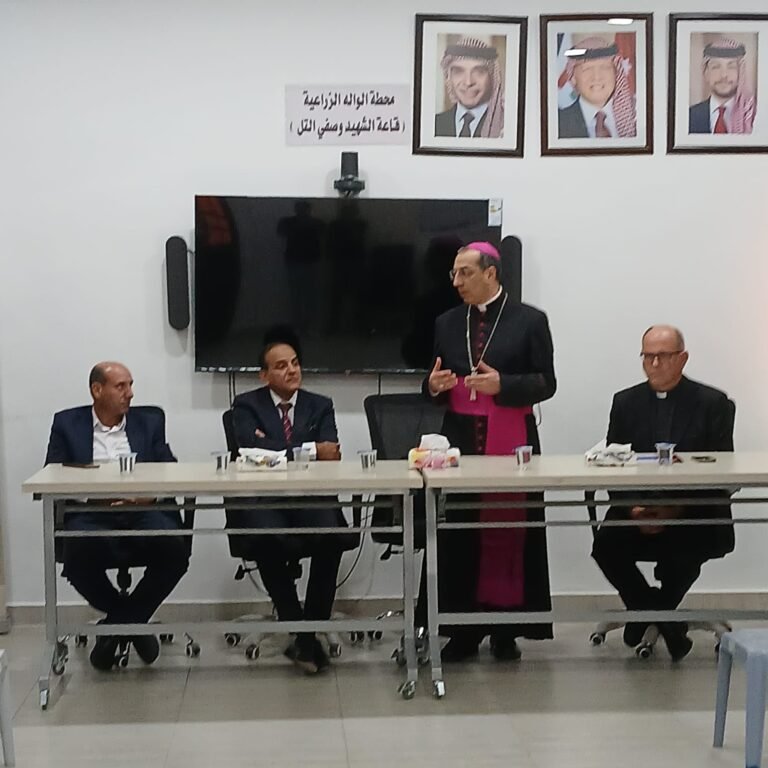
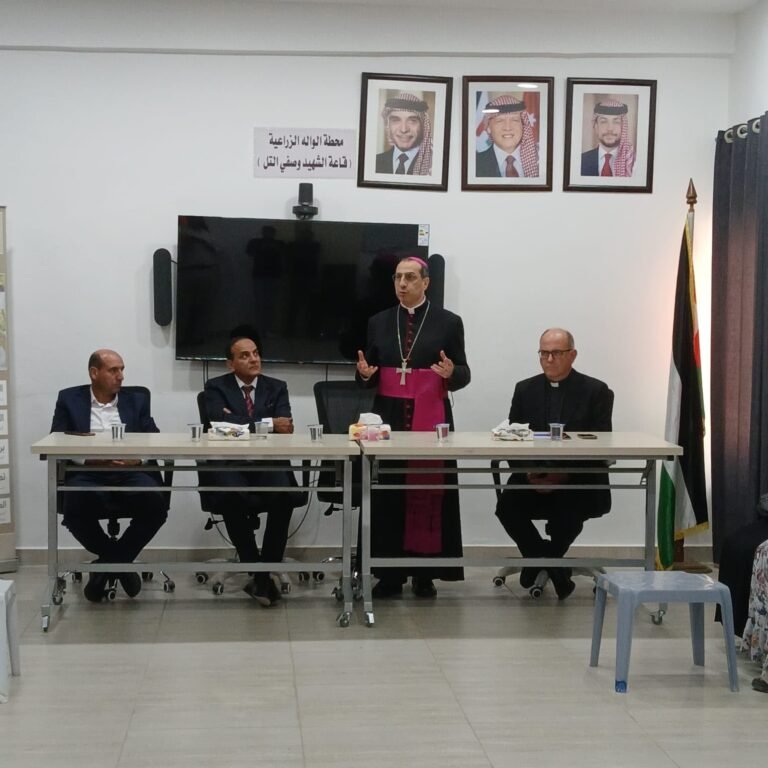
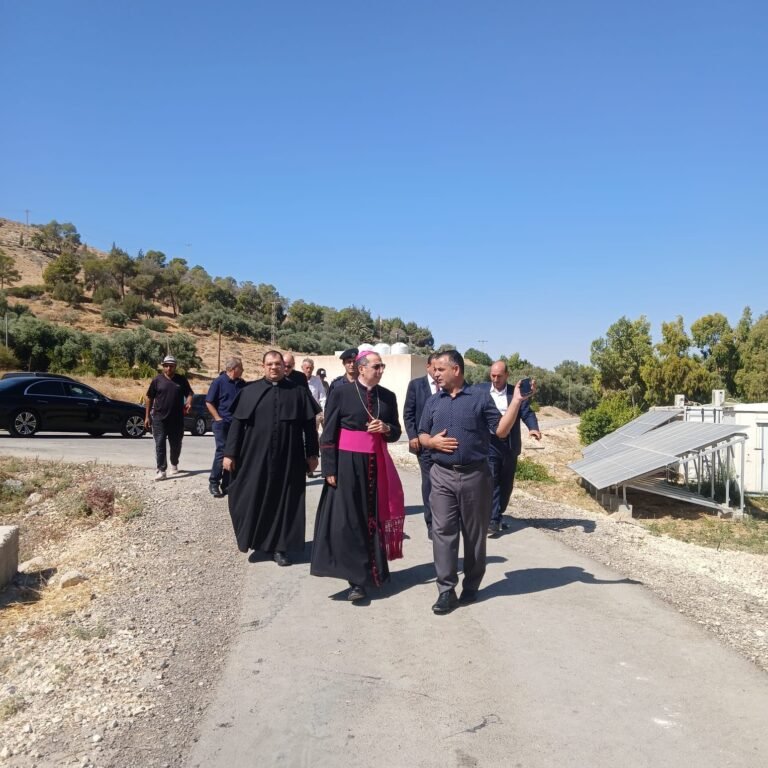
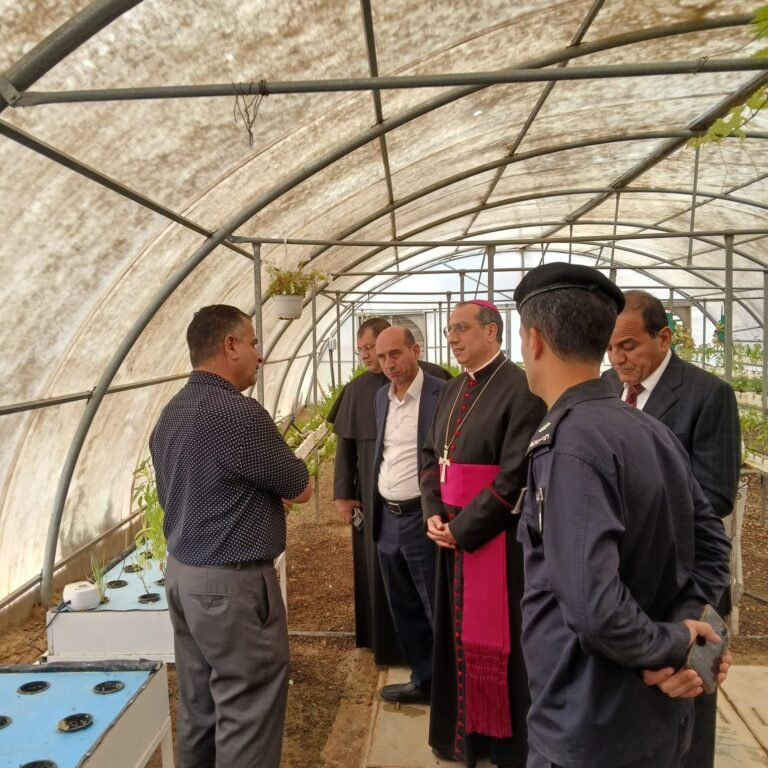
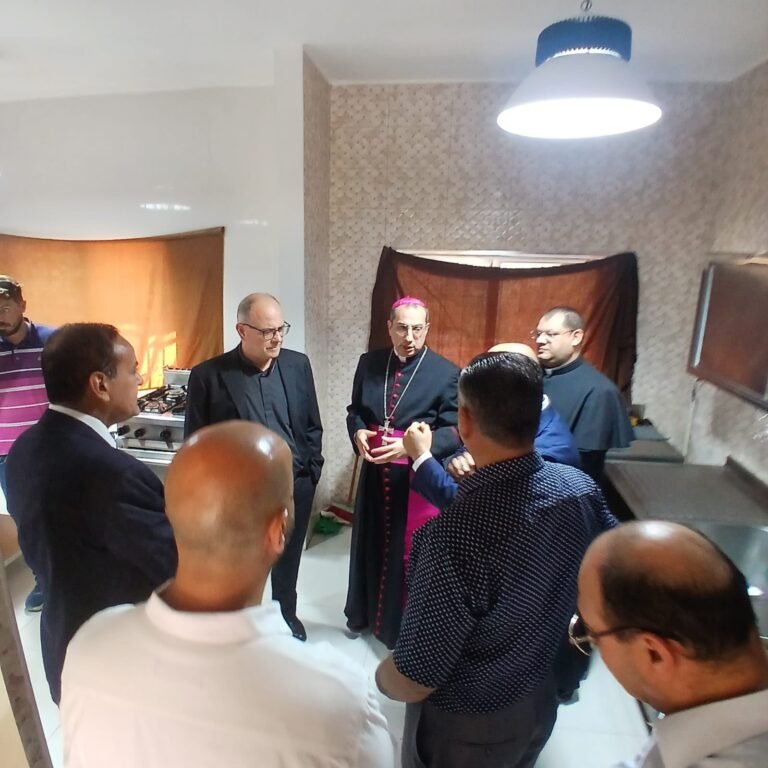
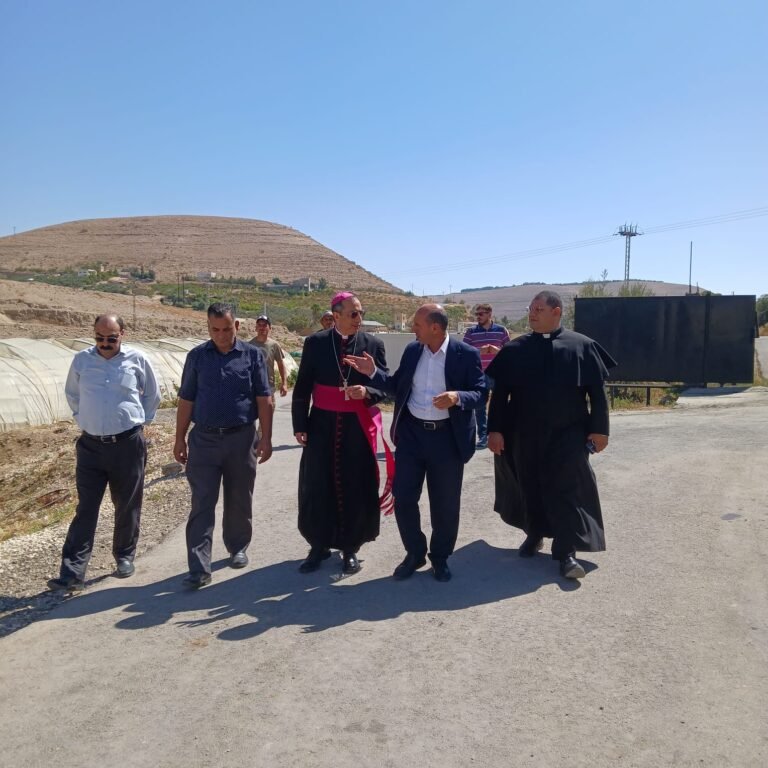
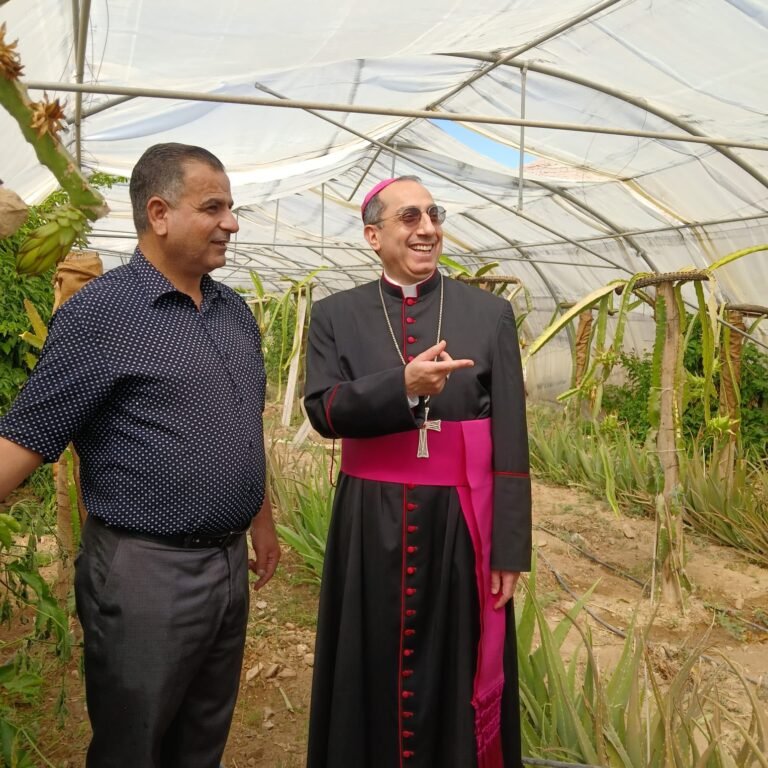
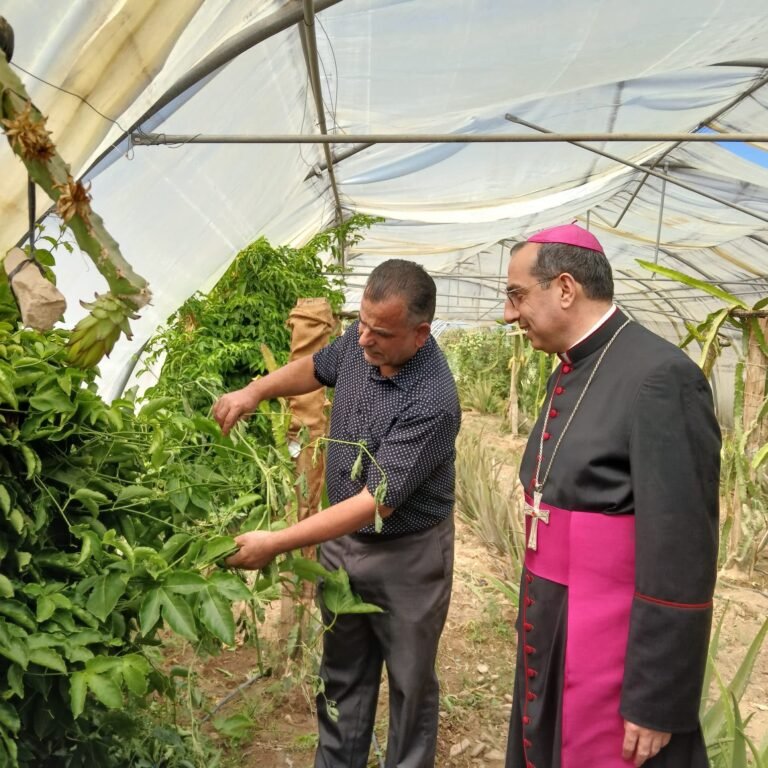
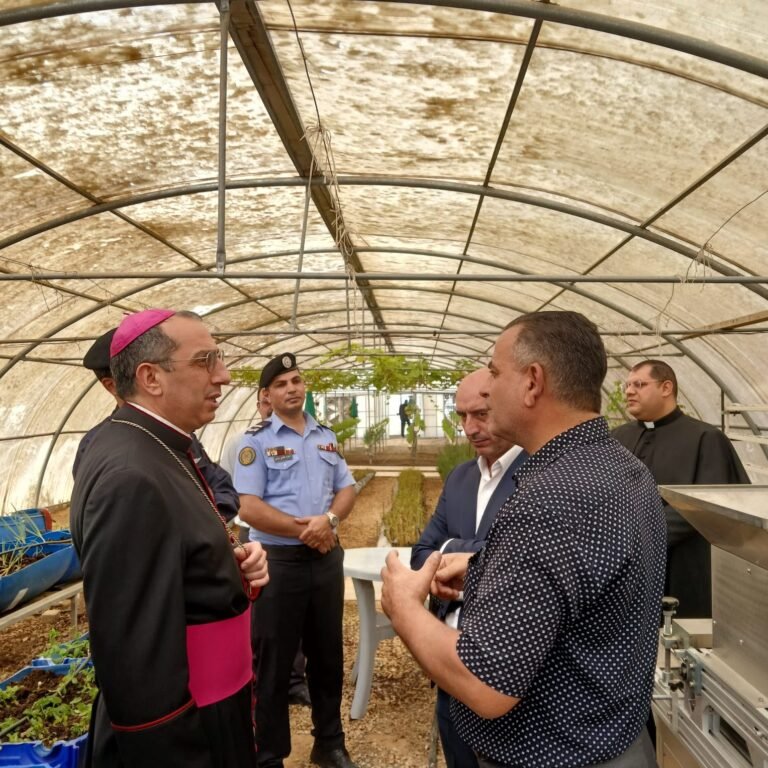
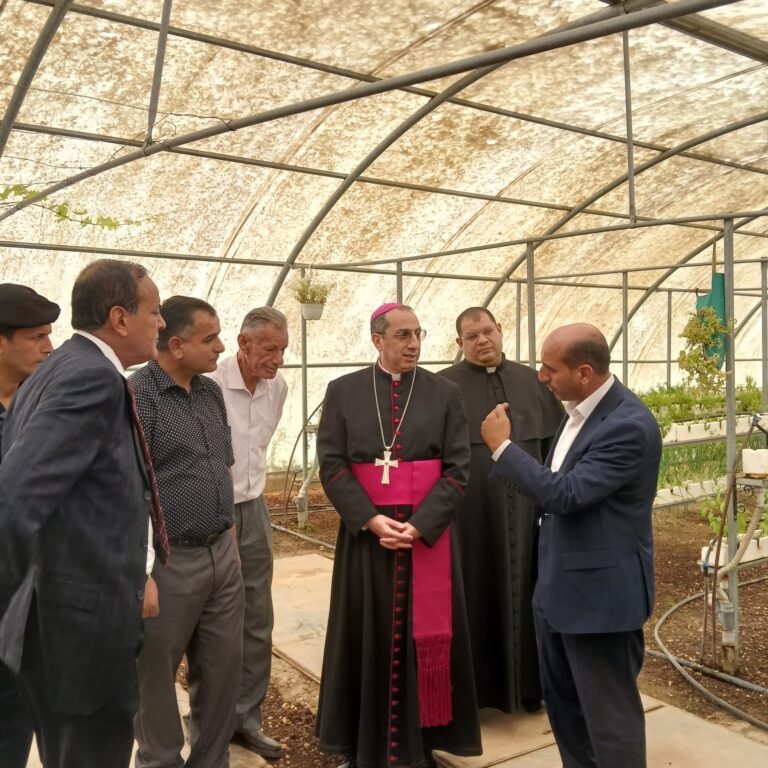
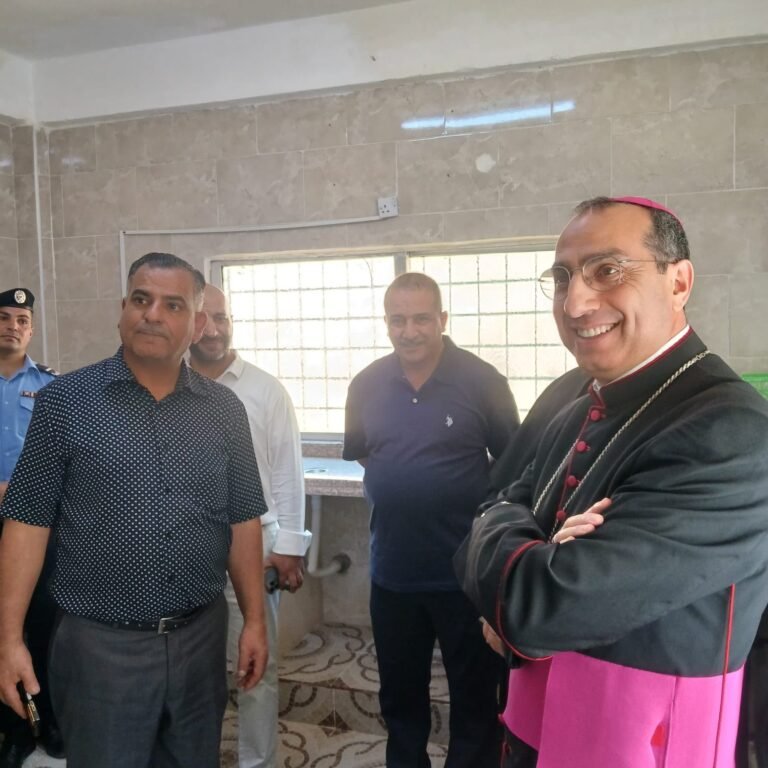
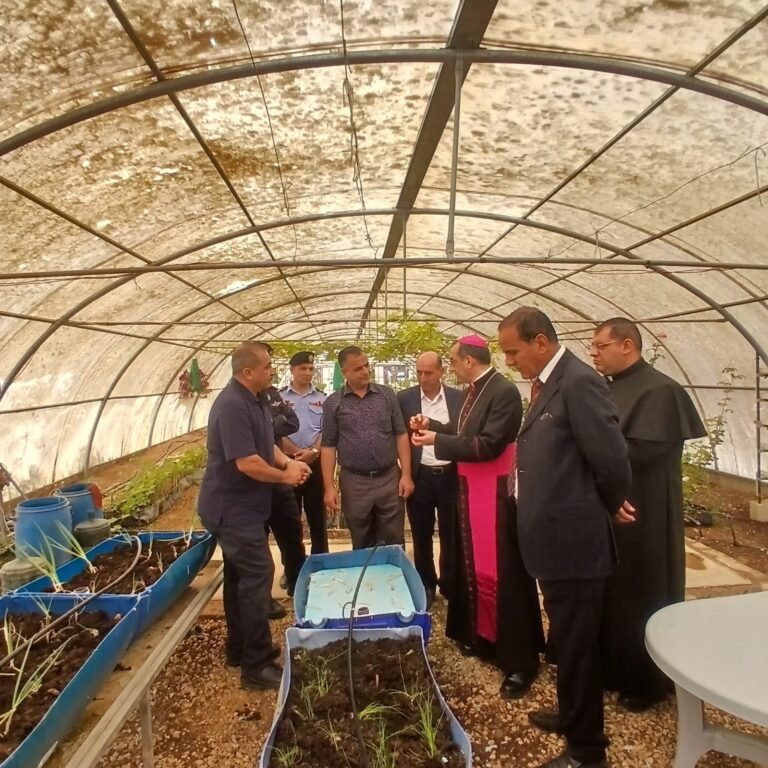
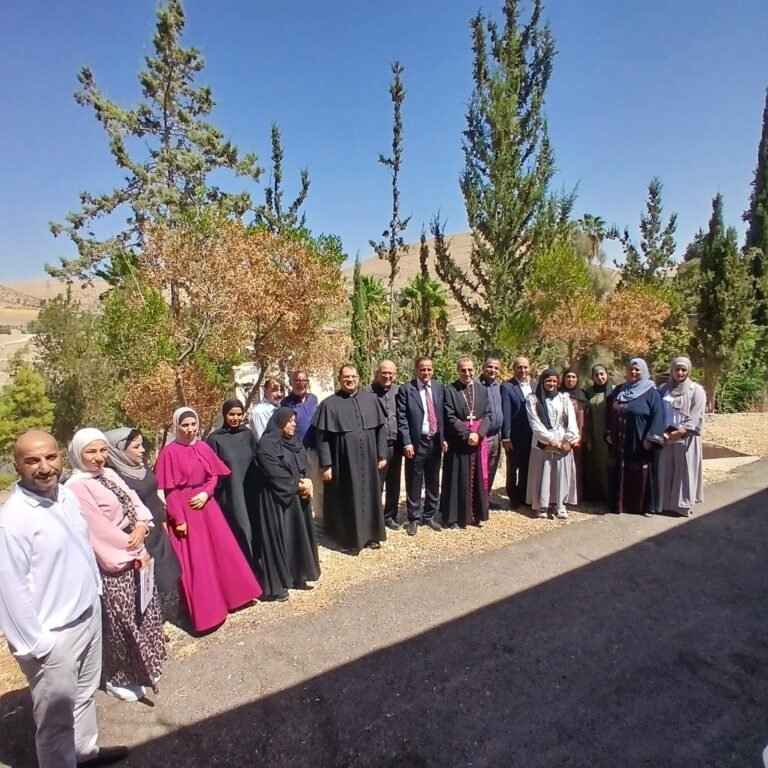
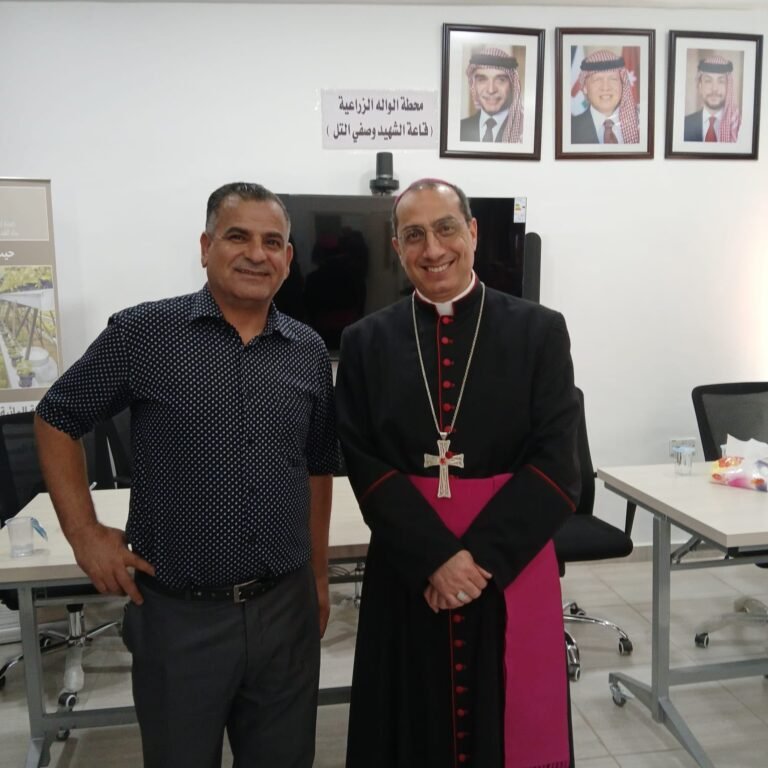
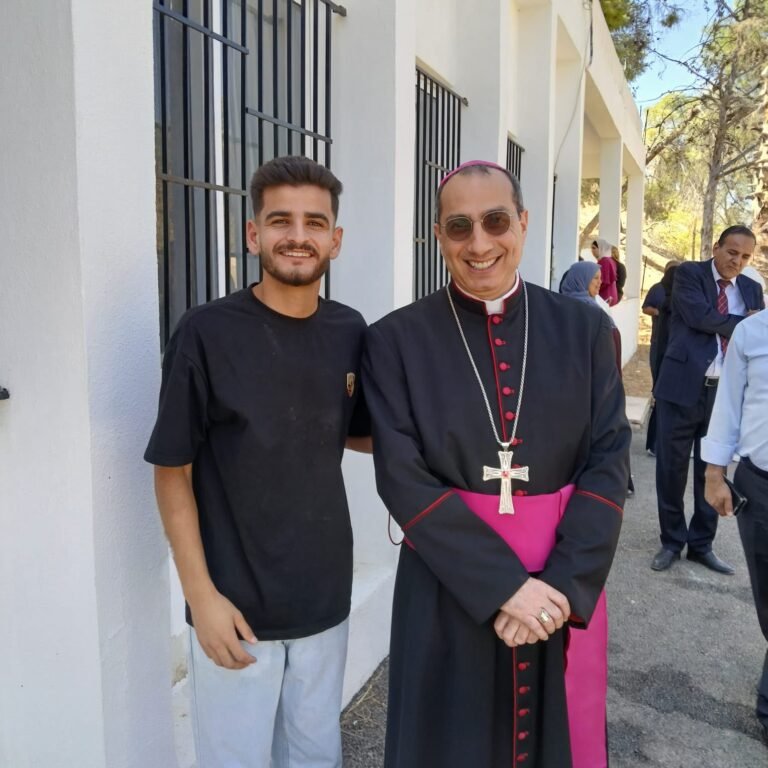
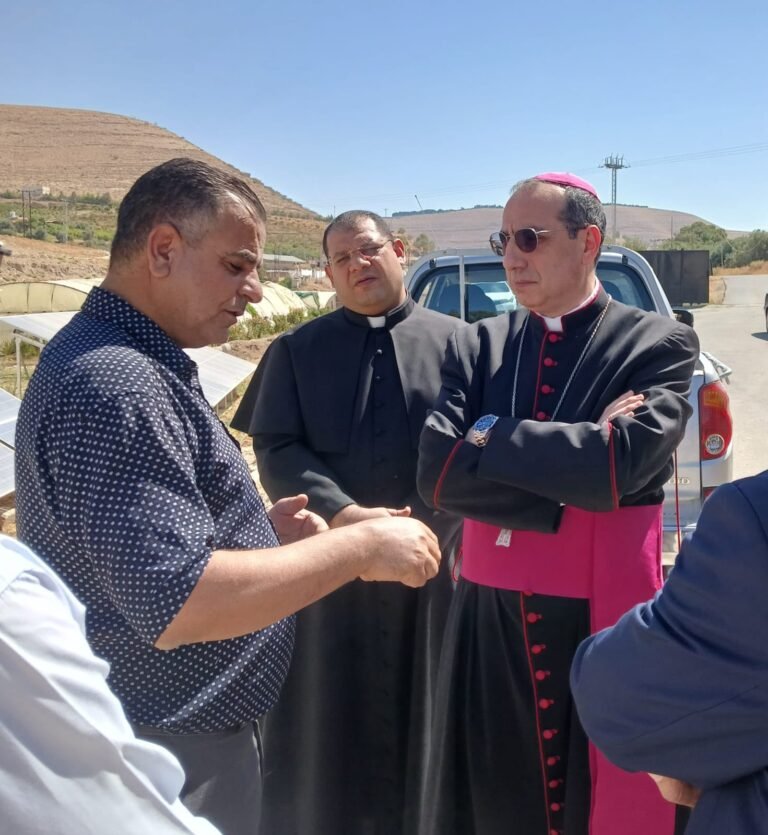
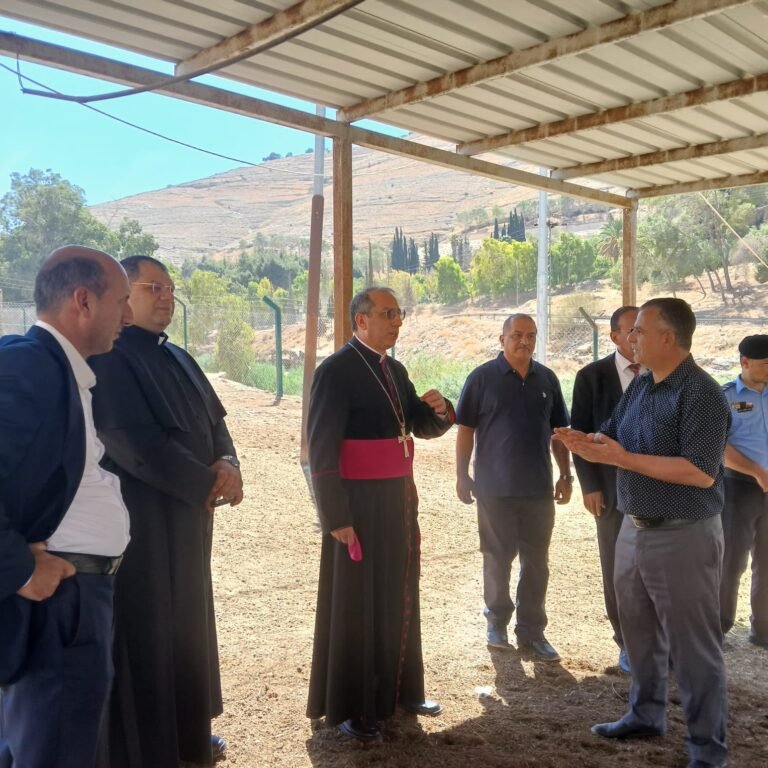
His Excellency Bishop Iyad Twal visited the Al-Wala area in Dhiban District, where he inspected agricultural projects being implemented in cooperation with the “Habibi” Cooperative Society at the Al-Wala Agricultural Station.
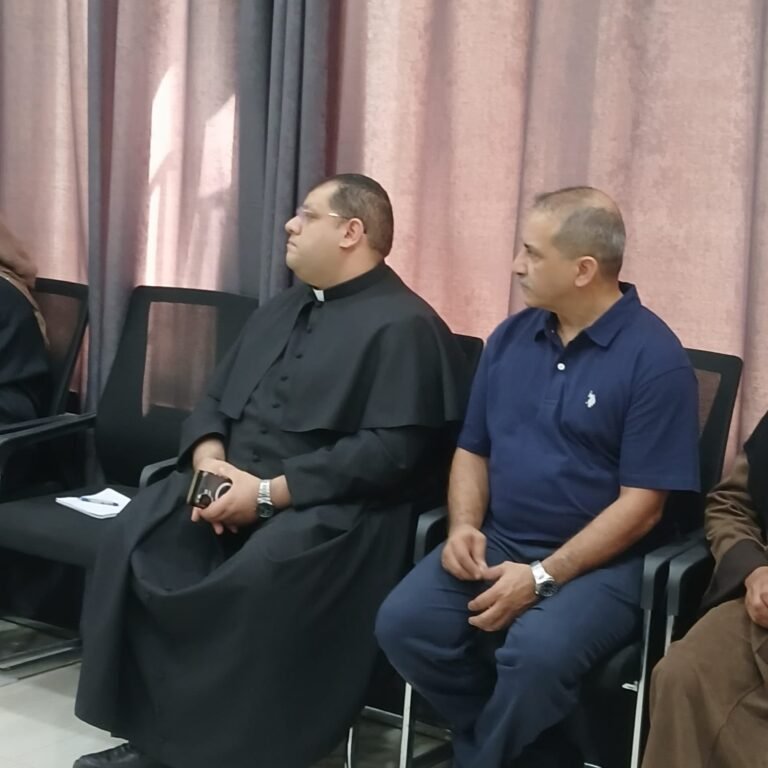
Bishop Twal was accompanied by Fr. Khaled Qamouh, Secretary General of the Patriarchate. The visit was also attended by Dr. Khaled Al-Haisa, Assistant Secretary General for Projects at the Ministry of Agriculture; Mr. Bandar Al-Zoubi, Administrative Governor of Dhiban District; and Eng. Mohammad Al-Sunaid, Director of the Al-Wala Agricultural Station.
The visit came as part of the Church’s ongoing efforts to follow up on development initiatives implemented in partnership with official institutions and civil society organizations. Bishop Twal was briefed on the progress of the agricultural projects, which aim to promote rural development and support local communities.
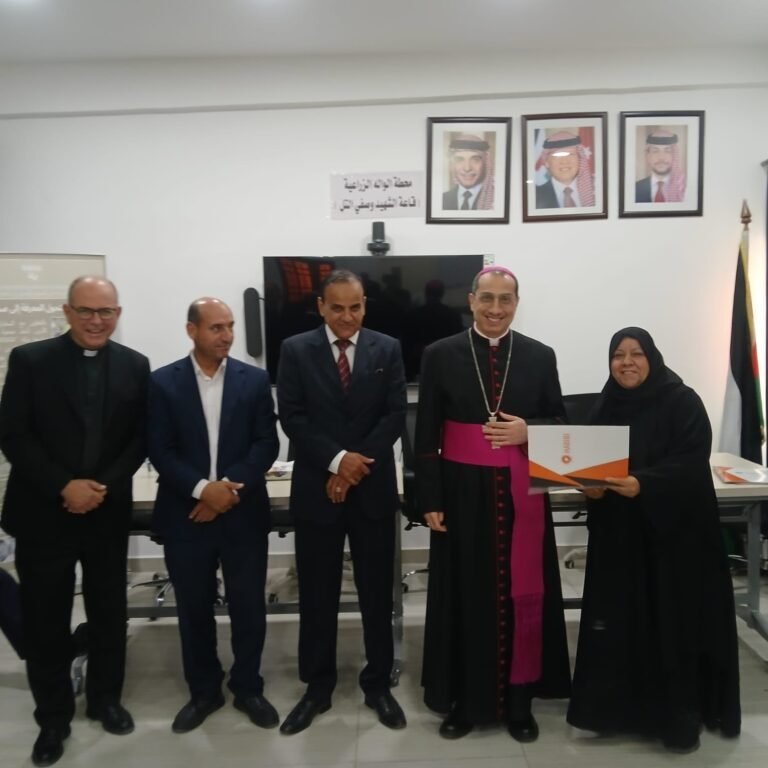
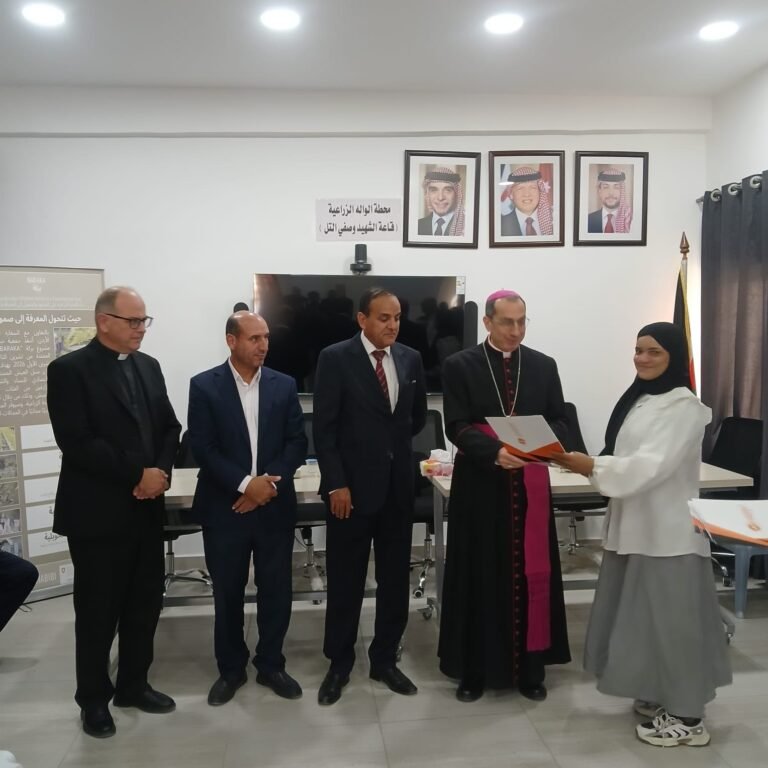
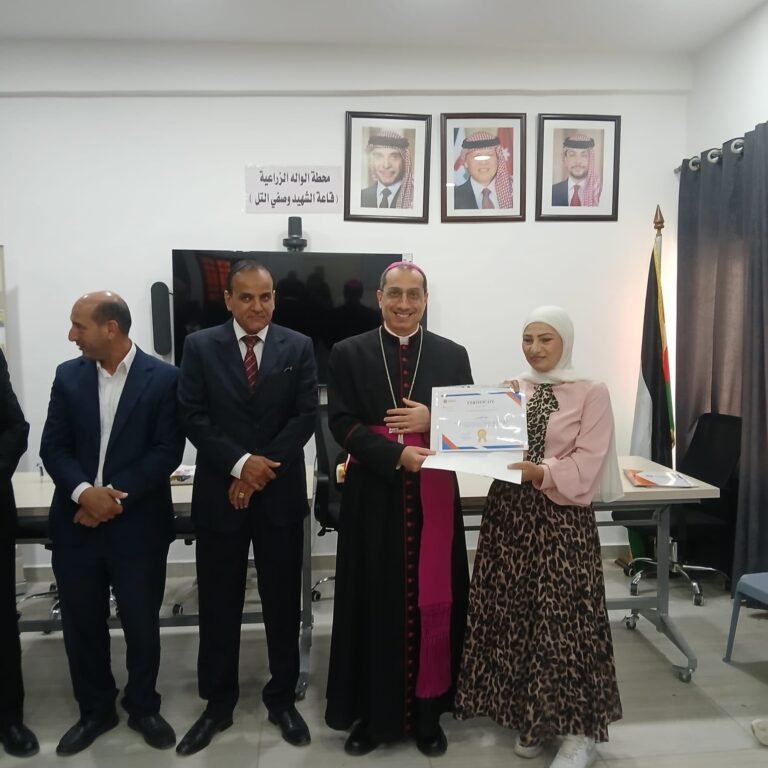
During the visit, certificates were presented to a group of women who had participated in women’s empowerment training courses organized by the Society. These courses aim to strengthen the role of women in the community and equip them with practical skills that can contribute to improving their economic and social circumstances.
In his remarks during the visit, Bishop Twal emphasized the strong cooperation between the Church and various official institutions and civil society organizations in serving local communities, particularly disadvantaged groups. He also stressed the importance of making effective use of opportunities for sustainable social and economic development.
Bishop Twal expressed his appreciation to the “Habibi” Cooperative Society and Fr. Mario Corneli for their continued efforts in supporting these projects, which reflect a spirit of partnership and cooperation between the Church and the wider community.
The visit reflects the Church’s commitment to supporting rural development initiatives and strengthening cooperation with official institutions and civil society organizations in serving local communities, ensuring the sustainability of these projects and creating a tangible and lasting impact on the lives of the people in the area.