Beloved,
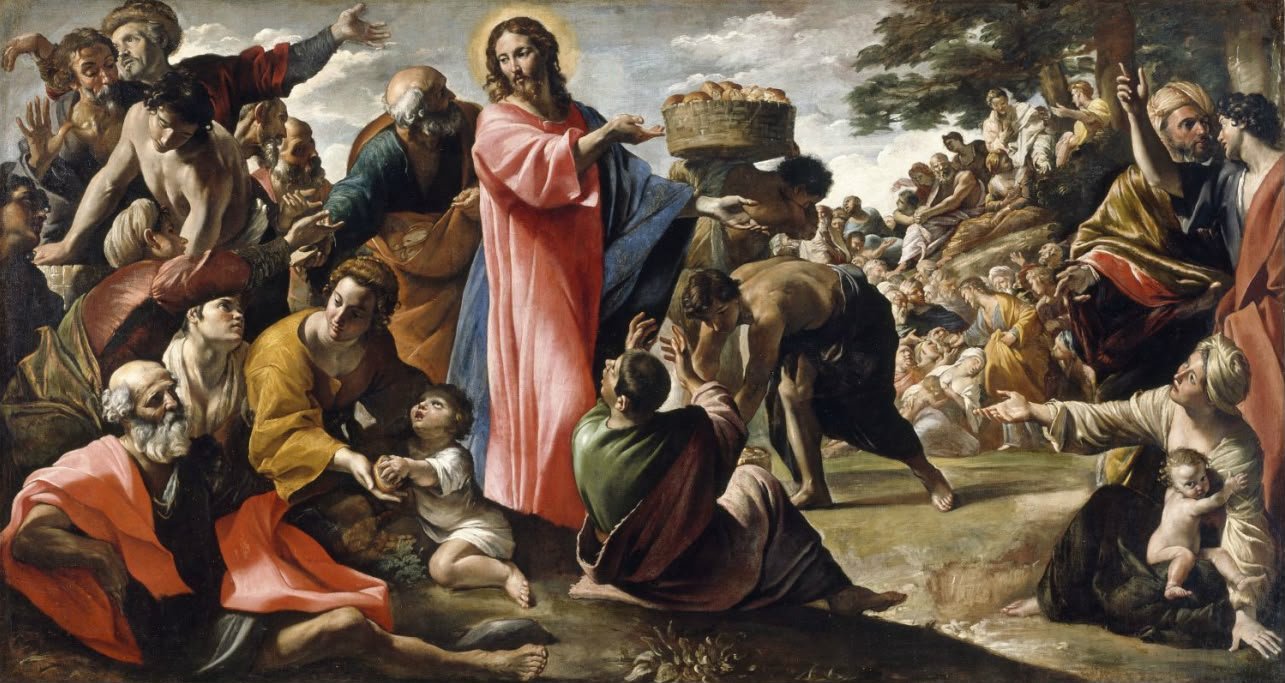
Jesus did not tell His disciples, “Step aside and I will handle it alone.” Rather, He said to them, “You give them something to eat.” As St. John Chrysostom notes, the Lord wanted to involve His disciples in His work. He took the little they had in their hands—five loaves and two fish—blessed it, and made it enough for everyone. He did not despise what was little, nor did He replace it with something else; instead, He allowed His grace to work through what man had offered.
Here we discover a profound spiritual truth: God does not cancel human agency when He intervenes; rather, He elevates and perfects it. Divine grace does not compete with humanity, nor does it render our efforts worthless. Instead, it makes the little we offer capable of bearing fruit beyond all expectation.
This truth is also evident in the story of the paralytic who lay bedridden for thirty-eight years. Jesus asked him, “Do you want to be healed?” The question might seem strange, but the Lord was inviting the man to participate in His miracle. Then He commanded him, “Rise.” And rising was the very thing the man was incapable of doing!
Yet, the man had to try. He had to trust the word of Christ more than his long experience of helplessness. He had to exert the effort of faith. And when he responded, his will met the grace of God, and the healing was accomplished. The miracle was not magic imposed upon him from the outside, but a divine grace to which human freedom responded.
Brothers and sisters,
We often desire for God to solve our problems without us lifting a finger, or to change our lives without us changing anything within ourselves. But God works differently. He grants grace, then invites us to participate. He gives us strength, but He does not absolve us of the responsibility to respond.
We find many examples of this kind of divine giving in our daily lives.
A true teacher does not merely give a student ready-made answers, but helps them discover the truth for themselves. And when the student succeeds, they feel the success is truly theirs, even though their teacher was the hidden support behind the achievement.
Good parents do not live their children’s lives for them, nor do they solve all their problems on their behalf. Instead, they provide the confidence and guidance for them to stand on their own two feet. True love does not foster dependency; it fosters maturity.
In social work, we see the difference between someone who gives a person in need money for a single day, and someone who helps them acquire a skill or a job opportunity that restores them to a life of dignity. The former alleviates a temporary need, while the latter grants a person the ability to rise anew.
Even in therapy and counseling, a wise companion does not live another’s life for them, but helps them discover the strength that God has placed within them. This is why some sages have said that the highest form of giving is to make the other capable of giving as well.
Christian mystics understood this mystery deeply. God does not treat us as worthless servants, but as children. He does not overwhelm us with His gifts to make us feel small, but to reveal our inherent dignity. And how difficult it is for a person to give without wounding the dignity of the one who receives! Therefore, it is rightly said: “When you give someone something, do so with great humility so that the receiver may forgive you your gift.”
Beloved,
In the Sacrament of the Eucharist, we learn from the highest school of giving. We offer the bread and wine of the earth, and God returns them to us as grace, life, and salvation. We give a little, and He returns to us far more than we can imagine. This is how God always works: He takes what is in our hands, no matter how small, and transforms it into a great blessing.
Let us ask ourselves today: Do we allow God to work through what we have, even if it is little? Do we respond to His grace when He tells us, “You give them something”? Do we rise when we hear His voice commanding, “Rise”?
The meaning of the Christian life does not lie in receiving alone, but in becoming partners with God in His giving. God is more than capable of preparing a table in the wilderness, but He chooses to use the loaves that we bring. He is capable of healing the paralytic, but He first invites him to try to stand.
Let our prayer today be: Lord, grant us the grace to cooperate with Your work within us, and to learn from You the art of giving—a giving that uplifts and never humiliates, that honors and never marginalizes—so that we may become true instruments of Your grace in the world. Amen.