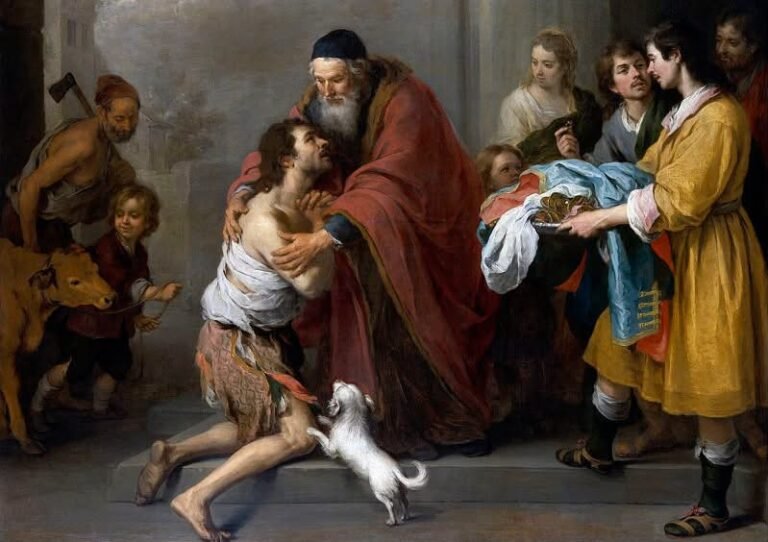
We are not perfect Christians; rather, we are all sinners who have received forgiveness. We know that our account with God always remains burdened with debts, yet we prefer to forget this. At the same time, we are careful to scrutinize our accounts with our brothers and sisters, keeping careful records of what is given and received, and seeking by every means to settle what we believe they owe us.
And so the questions remain: Why must we forgive? And how many times should we forgive? These are not Peter’s questions alone; they are our questions as well.
When the Lord Jesus Christ appeared in the history of the people of the Old Covenant, they had already come a long way in their understanding of forgiveness. In the time of Moses, the law of retaliation sought to place a limit on the chaos of personal vengeance: punishment was not to exceed the harm that had been done. Then came the prophet Jeremiah, who took a further step. He no longer took justice into his own hands, but placed his case in God’s hands, even though he still appealed to God’s justice against his enemies.
In the second century before Christ, the wise Sirach clearly proclaimed the necessity of forgiveness, saying: “The vengeful will suffer the Lord’s vengeance.” We heard this in the first reading. The reasons he gives can be summarized in two essential points: How can we ask God for mercy if we do not show mercy to our brothers and sisters? And how can we refuse forgiveness when we remember our own weakness and mortality as human beings?
It may seem that the Lord Jesus Christ is simply repeating this same message, but Peter wonders: Has the Teacher brought something new? Is it perhaps a matter of how many times we are to forgive? So he asks: “Lord, if my brother sins against me, how often must I forgive him? As many as seven times?” Jesus immediately answers him: “I say to you, not seven times but seventy-seven times.” In other words: always, without limit. And to help Peter understand the meaning and foundation of forgiveness, Jesus tells the parable of the debtors. The message is clear: the debt that the wicked servant refused to forgive his fellow servant cannot be compared with the enormous debt that his master had forgiven him.
Once again, the Lord Jesus leads his listeners to the heart of the matter: God is at the center of everything. God’s forgiveness is the source and measure of our forgiveness toward our brothers and sisters. We forgive because God has forgiven us and continues to forgive us. And we forgive without limit because God forgives us without limit.
Peter had become caught up in the debates of the scribes and Pharisees, some of whom limited forgiveness to only three times. Peter thought he had reached the height of generosity when he proposed the number seven. But Jesus reveals to him that the logic of calculation has no place in the Kingdom of God. If we insist on counting, then we must go far beyond the limits of human perfection to something much greater.
The idea, then, is this: if you try to count four hundred and ninety times, you will eventually discover that you can no longer keep counting—you will simply forgive.
And now, as we present our offering at the altar, how can we fail to remember the words of the Lord Jesus: “If you remember that your brother has something against you, leave your gift there first, and go and be reconciled with your brother”? In the sacrament of the Eucharist, we are united with Christ who, in his Passion, “when he was insulted, did not return insult; when he suffered, he did not threaten.”
Let us keep this truth in our hearts: the measure of forgiveness is forgiveness without limits. In this way, peace triumphs over violence, love over hatred, and mercy over revenge.